Sign a Contract PDF Online Safely: Don’t Upload It First
2026-04-26 · 4 min read · PDFTasker Team
"I only need to sign one page."
"The contract is already a PDF. An online signing site should be fine, right?"
That is the usual moment.
The file is ready. The client is waiting. The upload box looks harmless.
Should a contract PDF go there first?
Usually, no.
Not because signing a PDF is exotic. The risk is simpler: a contract is a bundle of business context, and upload-first tools ask you to hand over the whole bundle before you know what they do with it.

The risk is not the signature. It is the upload.
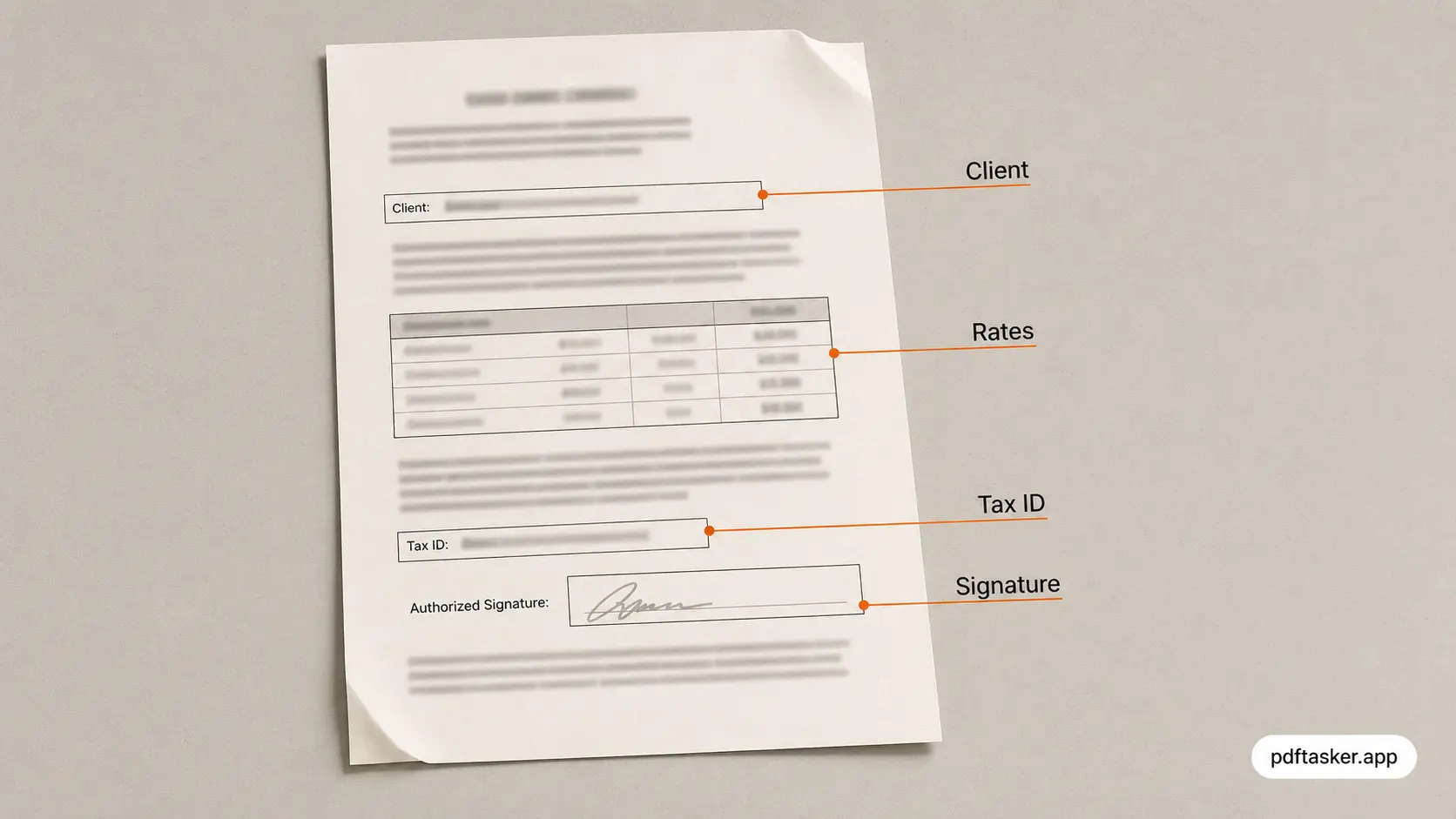
A signature box is tiny. The contract around it is not.
A normal freelancer agreement can carry the client name, your legal name, rates, payment terms, scope, addresses, tax details, dispute language, bank instructions, and sometimes ID scans.
That is not "just a PDF."
It is a compact business record.
Once the whole file leaves your browser, the trust surface changes. You are trusting the upload request, temporary storage, processing workers, logs, backups, support tooling, and retention policy. A good provider may handle that responsibly. The point is narrower: the upload happened before you had to make that trust decision.
If you can sign in the browser, the safer default is boring.
Keep the contract local. Put the signature where it belongs. Download the result.
Three assumptions that fail in contract workflows
The same mistakes repeat.
They are not dramatic. That is why they slip through.
Pattern 1. "It is already signed, so it is less sensitive"
The opposite is often true.
After signing, the file may contain both parties' names, signature images, dates, countersignature blocks, and final terms. A draft may be awkward. A signed contract is evidence.
Upload-first signing turns that evidence into an object inside someone else's system.
Pattern 2. "The site says it deletes files later"
Deletion later is a retention claim.
It is not a no-upload claim.
The contract may still pass through request handling, conversion, preview generation, error logging, and temporary storage before deletion. Those paths may be short. They may be well managed. Still, they are paths you did not need for a simple signature.
Pattern 3. "The signature tool only sees the signature page"
Usually, the tool receives the file you give it.
If you upload the full agreement to sign page 8, the full agreement is what travels. The tool may display one page. That is not the same as receiving one page.
This is where the workflow breaks.
What safer signing looks like
The better pattern is not complicated.
First, decide whether the contract must use a formal e-signature platform. Some agreements do. Some clients require it. Some regulated workflows have their own rules.
If the job is simply "place my signature on this PDF and send it back," keep the work smaller.
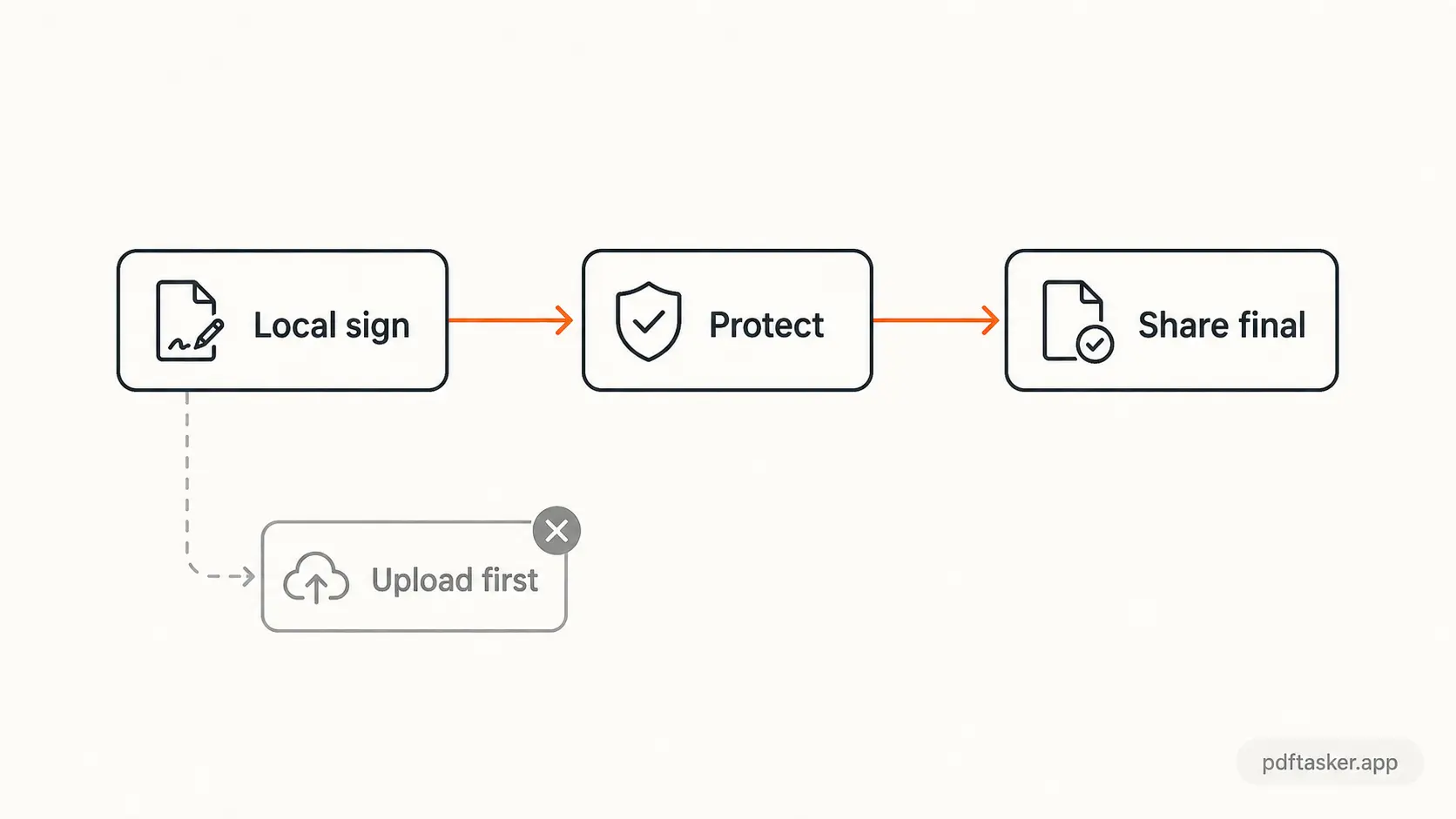
- Sign the PDF in your browser with a local PDF signature tool.
- Add a password before sending if the recipient expects a protected copy with PDF protection.
- Remove hidden document metadata when it is not needed with PDF metadata cleanup.
- Send only the final file, through the channel you and the client already agreed to use.
No ceremony.
Just fewer unnecessary copies.
The last mile is still judgment
The problem was not the signature.
The problem was not the PDF format.
The problem was handing the whole contract to a tool before asking whether the tool needed it.
That is the last mile: judgment before upload.
For low-risk files, an online service may be fine. For contracts, IDs, tax documents, and client records, start with the smaller path. Sign locally. Protect when needed. Clean metadata when useful. Then share the file on purpose.
PDFTasker is built around that browser-first default. The document stays on your device for routine PDF work.
That is the point.
PDFTasker
Sign